CRM · a Meta-Me app
Remembers the people you work with, so you don’t have to
Tell it what happened after a call. It keeps track of what was promised, notices what has changed, and reminds you who to get back to.

What it looks like
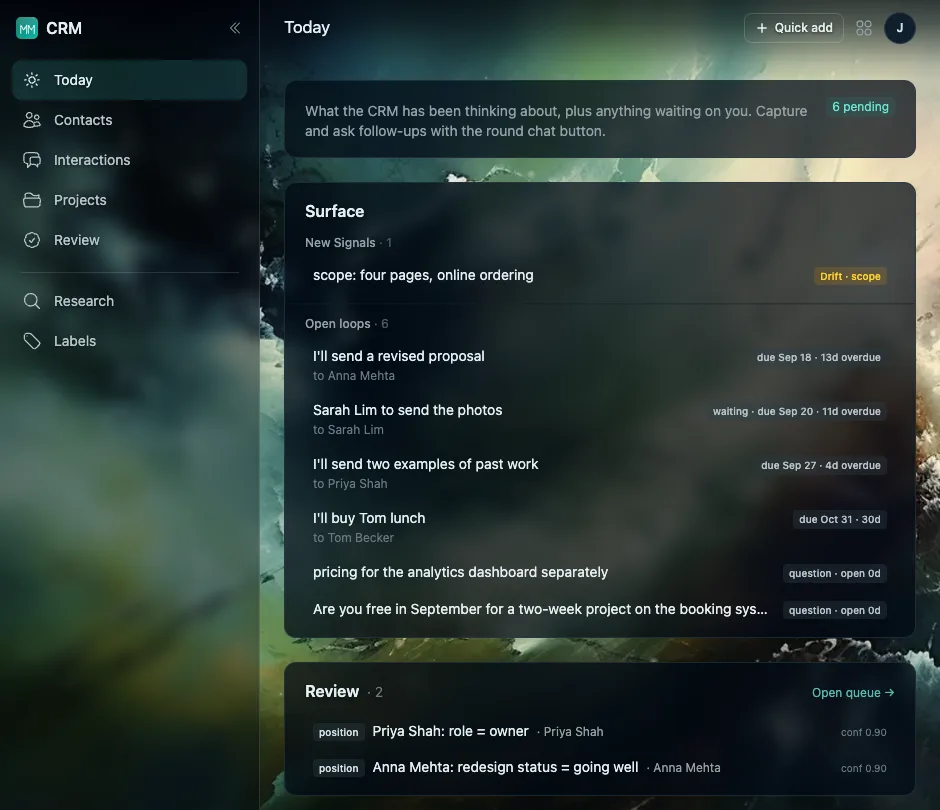
Six conversations in, this is your morning
A brief that has grown since the first call, the proposal you promised Anna, the photos Sarah said she would send, and two questions nobody has answered yet. All of it picked up from a sentence or two after each conversation.
Tell it
Say what happened, in your own words
After a call or a coffee, tell it what was said: type it, or talk into your phone. No forms, no fields to fill in. It works out who it was about, what was agreed and what changed.

It remembers
Promises, changes and replies you owe
It keeps track of what you promised and by when, what they promised you, and when someone you owe a reply has been waiting. It notices when a client’s brief has quietly shifted since you last spoke.

It reminds you
Each morning, the few things worth your time
Open it and it shows you a short list, never more than a handful: what has changed since you last spoke, the people you like to keep in touch with who have gone quiet, and the promises still open. Each one says why it is there.

Relationship care, not relationship management.
It asks when it isn’t sure
If it is confident, it saves quietly. If not, it asks you with one tap. If it is unclear, it writes nothing at all.
MorePeople, not deals
Someone can be a past client, a friend and the person who refers you work, all at once. Projects come and go; the relationship stays.
MoreNot a sales pipeline
No stages, no quotas, no forms. It is for looking after the people you work with, not for squeezing them through a funnel.
MoreStart today
Try it free for 30 days
It comes with a Meta-Me subscription: £8 a month, every Meta-Me app included, cancel any time. Nothing to install: sign in and tell it about the first person.
Part of Meta-Me
One subscription. 7 tools.
Your subscription unlocks 6 more apps, all for the same £8/month. Start with a 30-day free trial.